Double-click to edit...
(日本語は英語の下にあります)
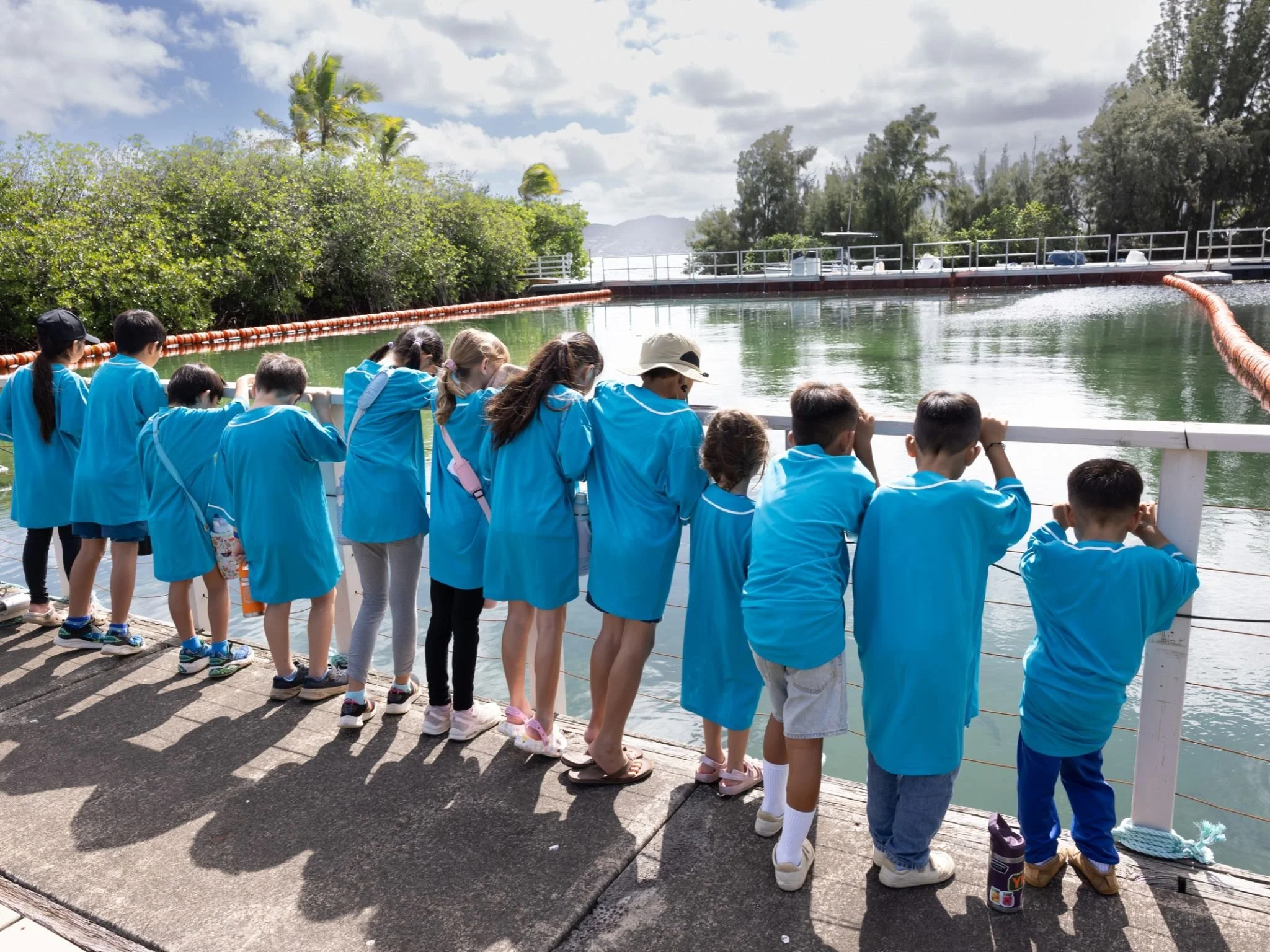
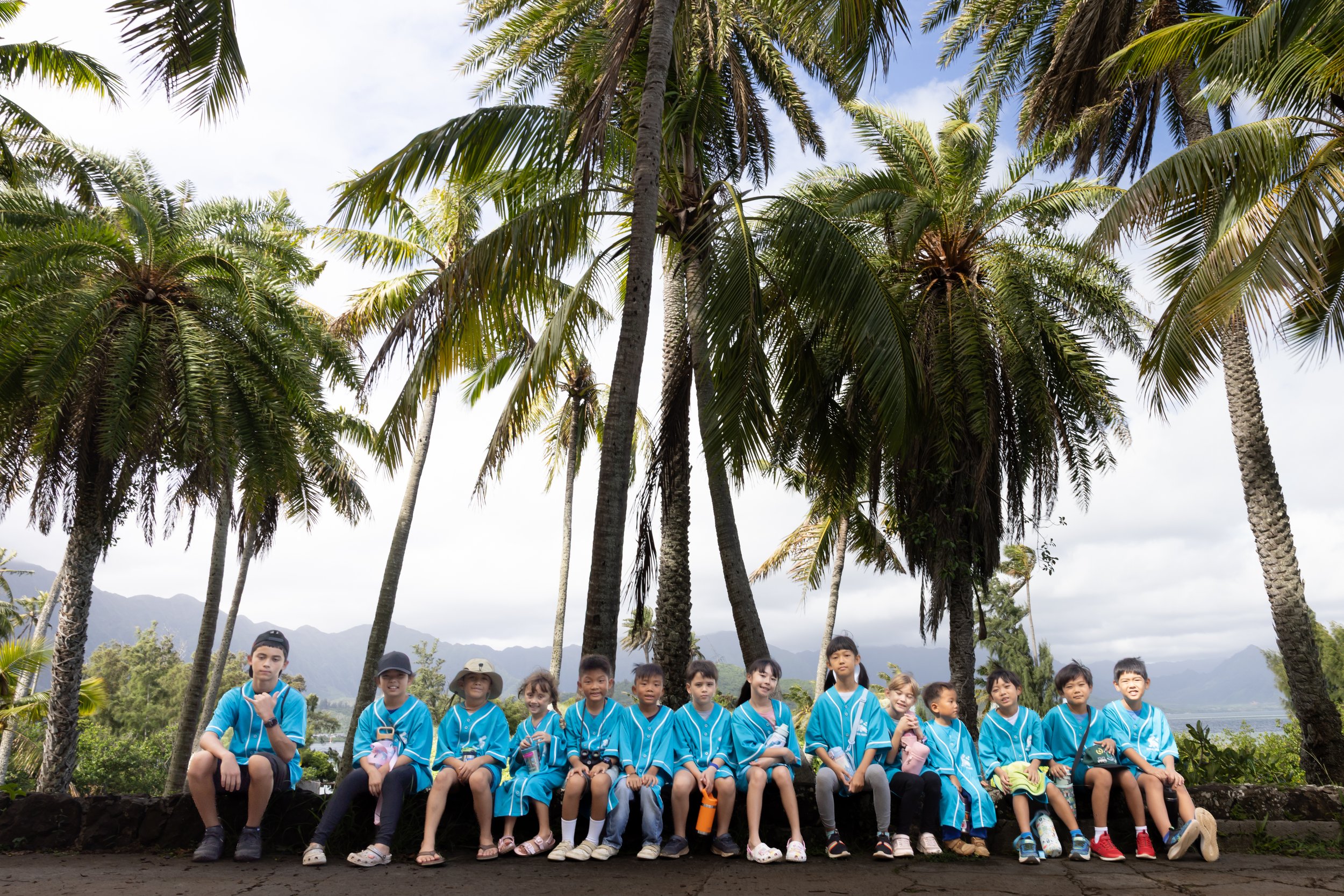
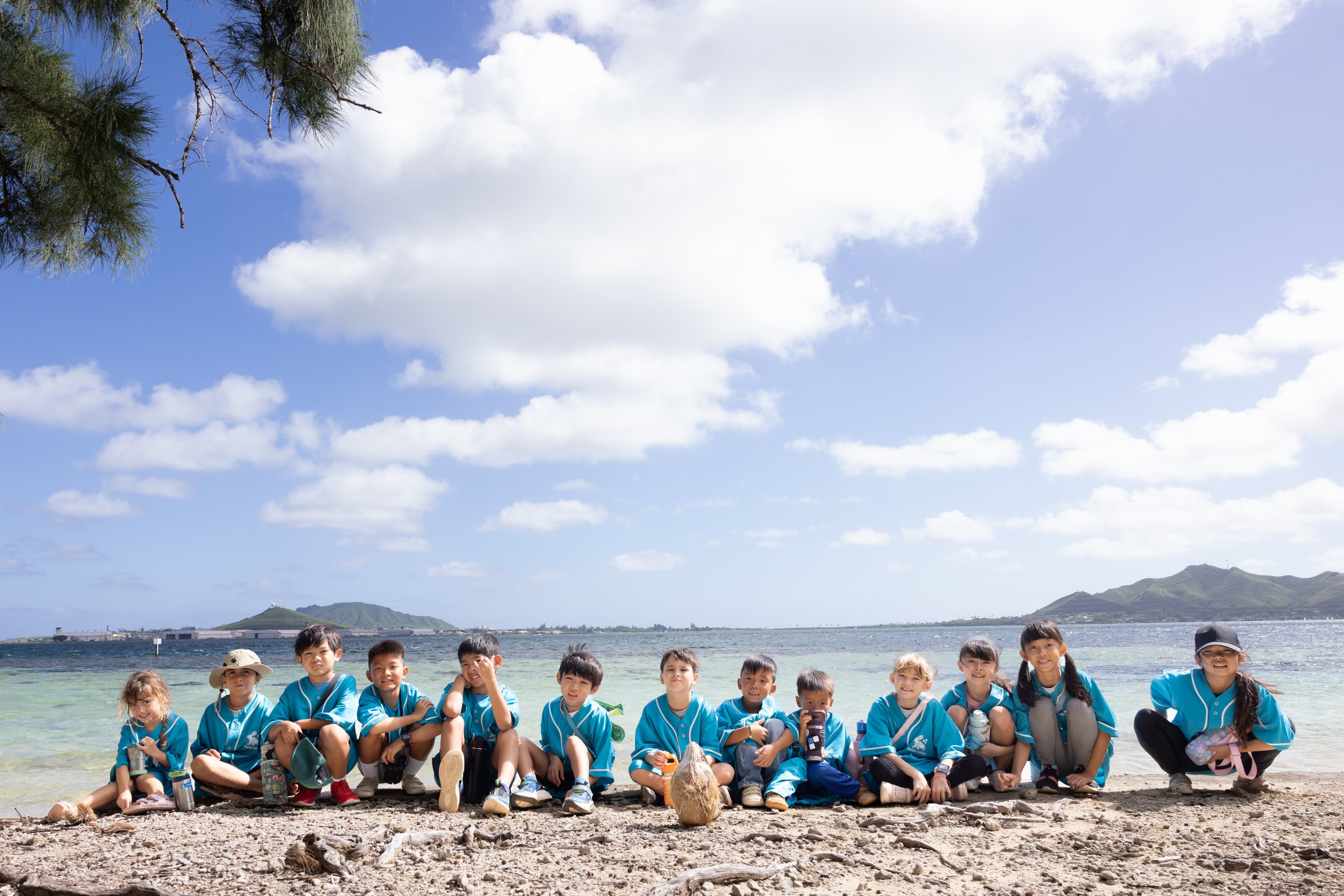
On Saturday, November 7, 2026, 14 children participated in MIRAI HANA's 29th Kids Job Experience Workshop, held in collaboration with the Hawaiʻi Institute of Marine Biology (HIMB) on Moku o Loʻe (Coconut Island) in Kāneʻohe Bay.
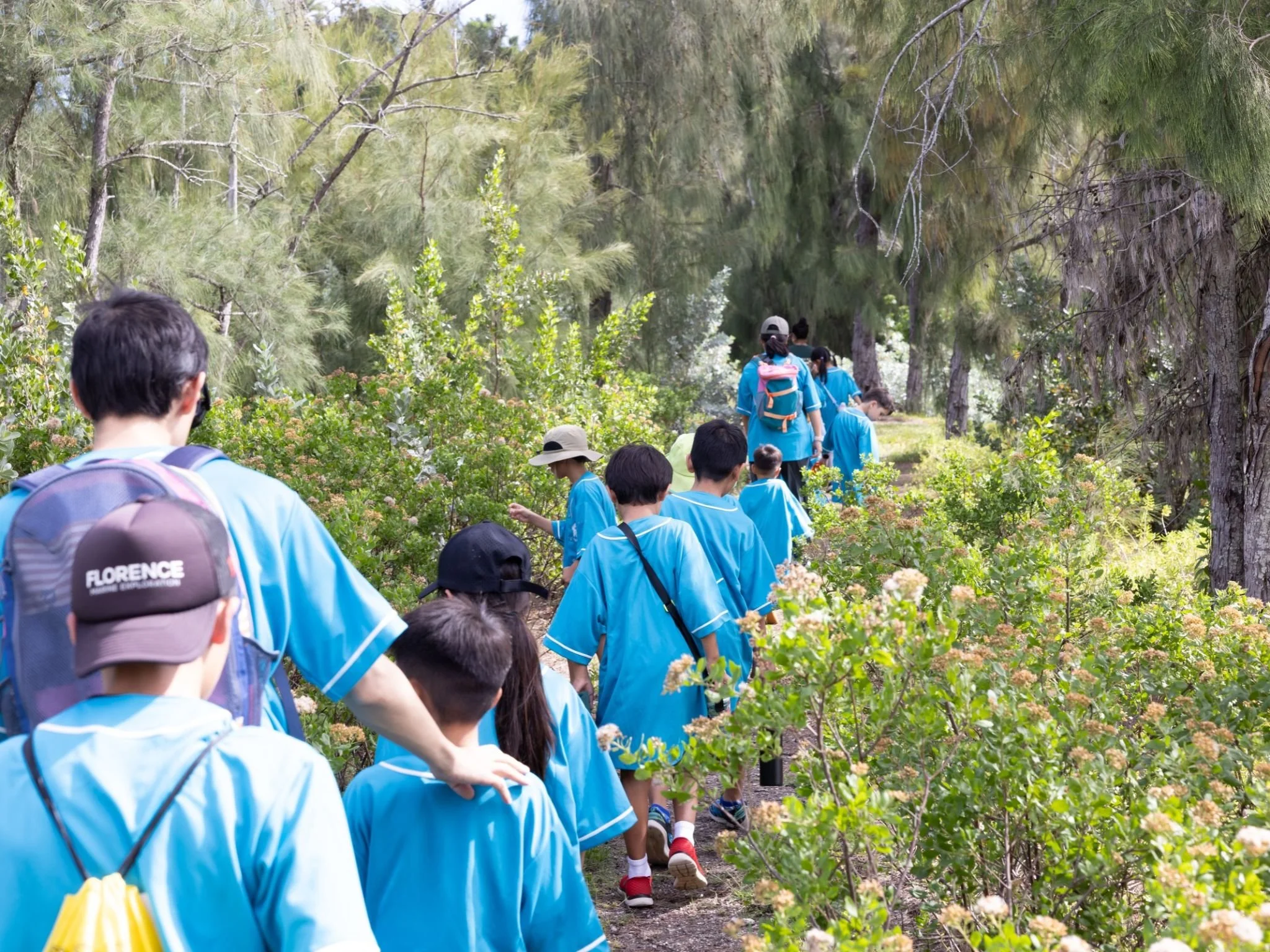
This special experience took the children beyond the classroom and into a real marine research environment, where they explored the island, observed marine life, discovered scientific research, and learned about the importance of protecting Hawaiʻi's oceans.
Guided by HIMB's Center for Community Education team, the children experienced what it means to observe, investigate, and care for marine life like a marine scientist.
🚤 A Special Journey to Moku o Loʻe
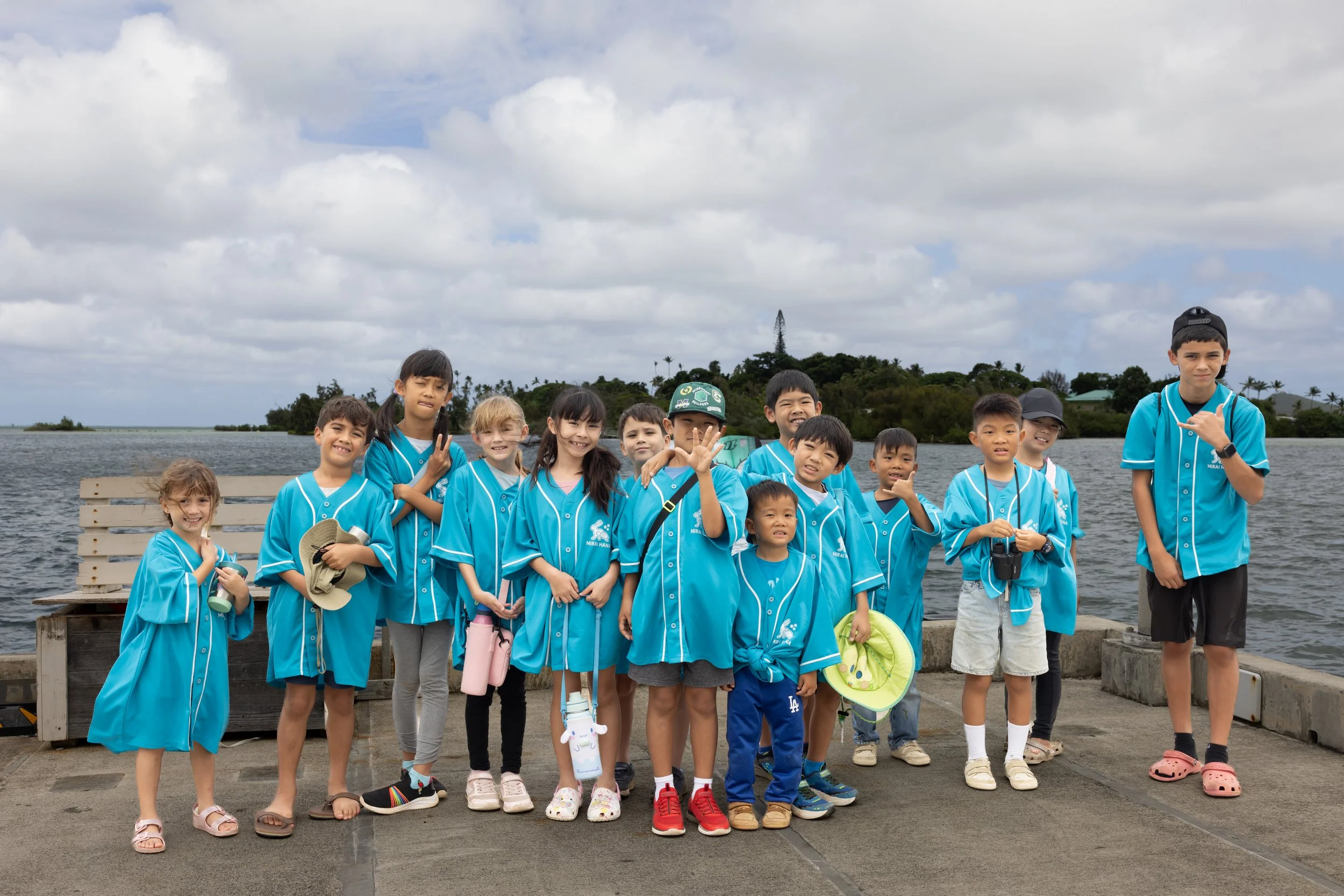
The adventure began at Lilipuna Pier, where the children gathered and prepared for their journey to Coconut Island.
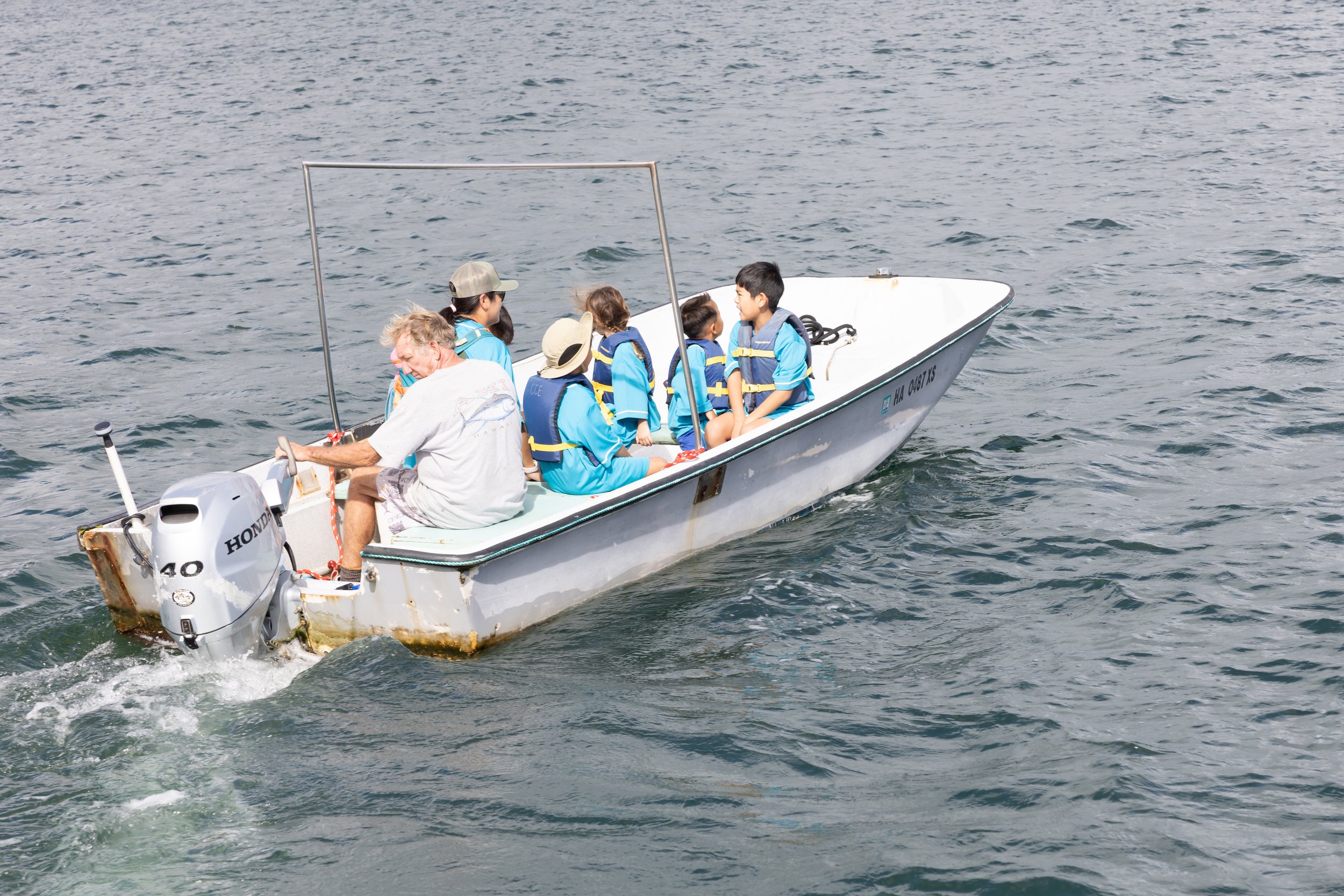
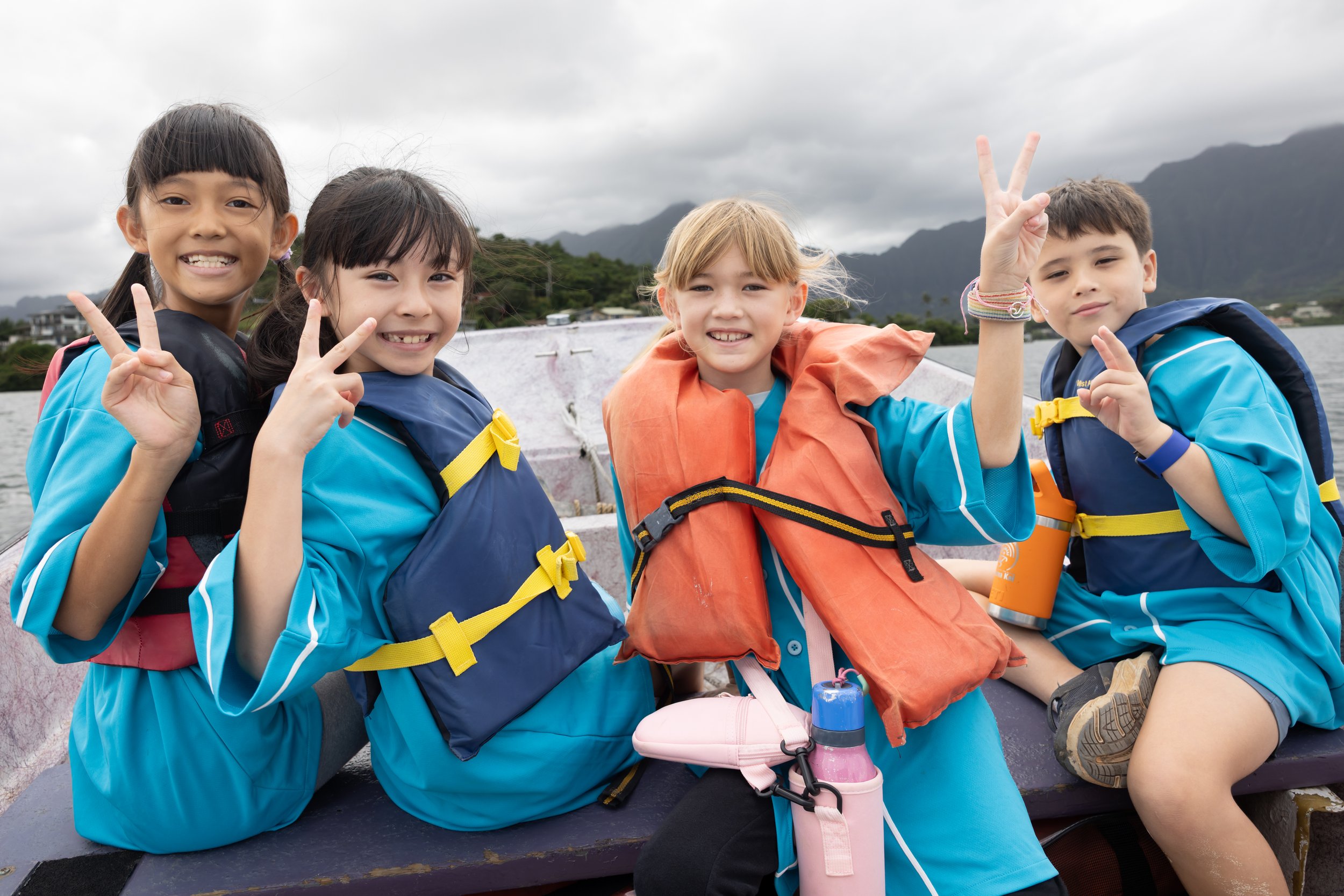
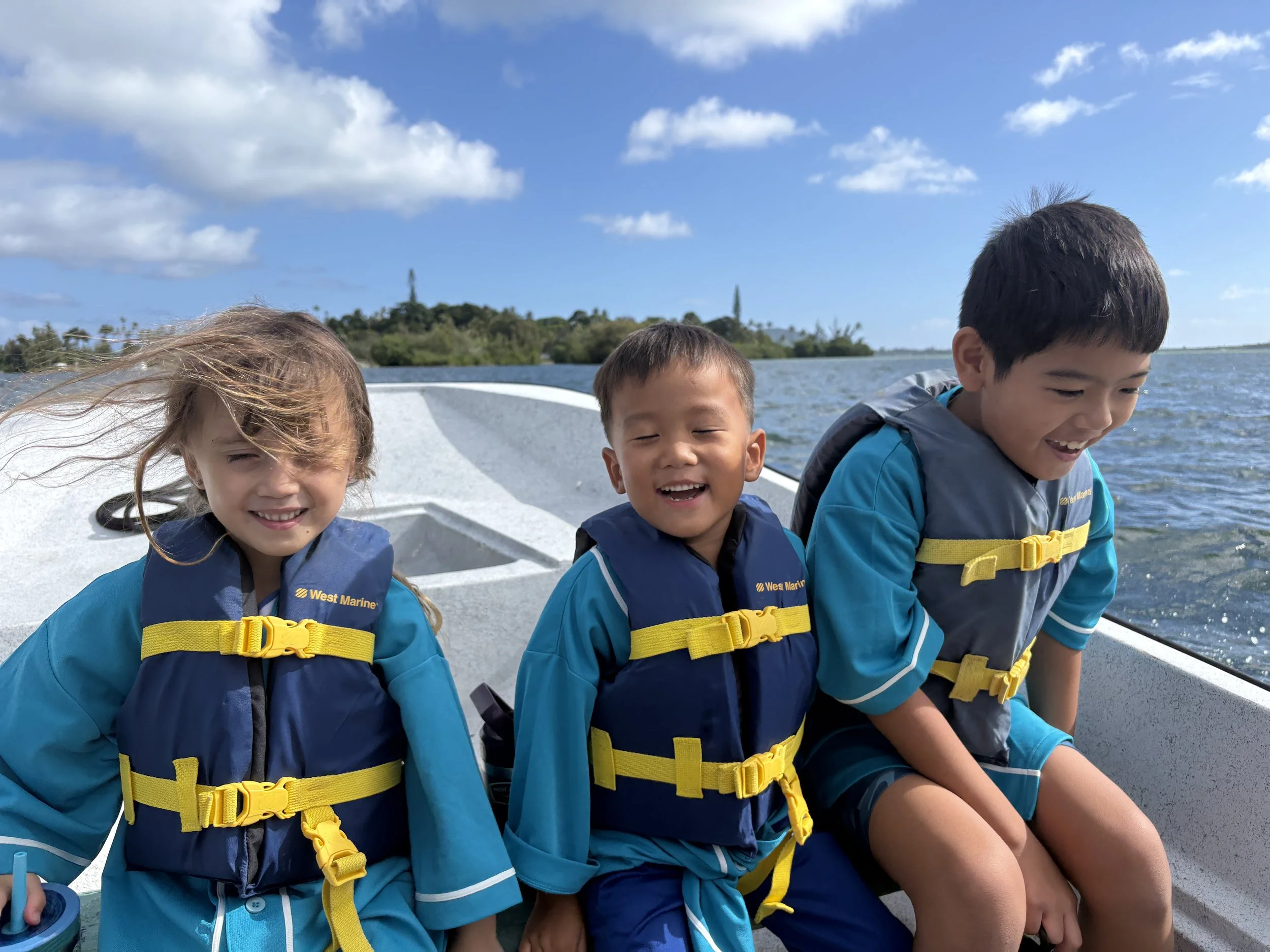
After learning important safety rules and putting on life jackets, they traveled by boat in small groups across Kāneʻohe Bay.
Arriving on an island dedicated to marine research made this experience especially exciting.
Before beginning the tour, the children learned how to explore the island safely, respect the research environment, and observe marine animals without disturbing them.
🔬 Discovering the Work of Marine Scientists
During the interactive walking tour, our guide, Lally, introduced the children to the many different kinds of research conducted at HIMB.
At one of the research areas, the children learned about marine mammals, including whales, dolphins, and seals.
Through an engaging question-and-answer activity, they explored what makes an animal a mammal, learning about characteristics such as breathing air, being warm-blooded, having hair, giving birth to live young, and nursing their babies.
The children discovered that marine biology covers an incredible range of subjects, from the largest animals in the ocean to microscopic organisms.
As they explored the island, they also observed fish, coral, and other marine life in the surrounding waters and research areas.
🪸🦈 A Closer Look at Coral and Shark Research
Before visiting the touch tank, the children explored two fascinating research areas where they had the opportunity to observe coral and a tiger shark up close.
🪸 Exploring Coral Research
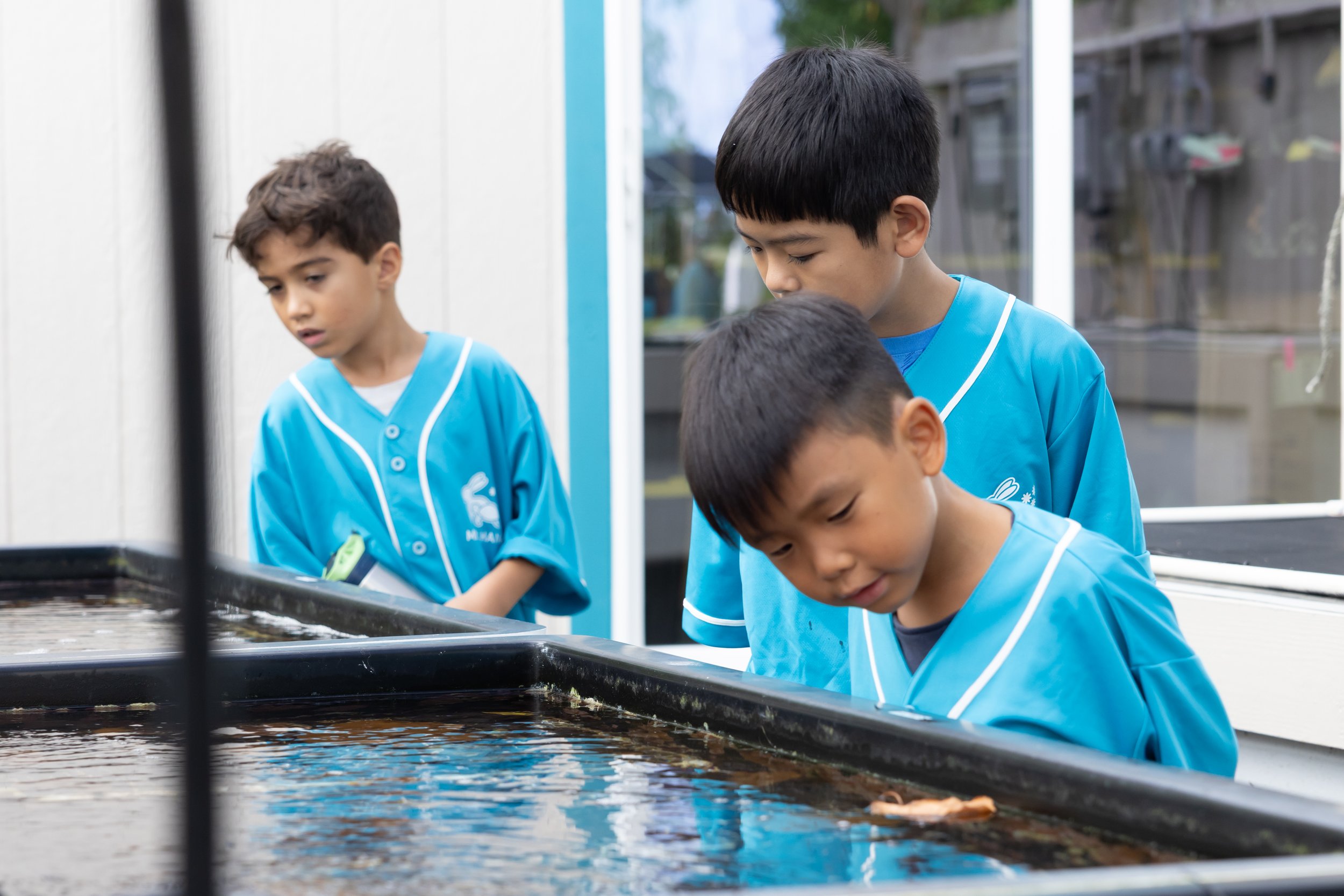
The children visited an area where corals are kept and studied for scientific research.
They had the opportunity to observe corals up close and learn why these delicate marine animals are so important to Hawaiʻi's ocean ecosystems.
Lally explained how scientists study coral growth, the conditions corals need to survive, and the challenges facing coral reefs.
The children were curious about how corals live and grow, and they asked questions about the research being conducted.
Through Lally's explanations, they began to understand that corals are living animals and that studying them is an important part of protecting Hawaiʻi's marine environment.
🦈 A Close-Up Look at a Tiger Shark
Another exciting moment was visiting an area where a tiger shark was being kept for research.
The children had a special opportunity to observe a real tiger shark up close and take a closer look at its appearance, size, and distinctive features.
Curious about the shark, the children asked Lally a few simple questions, including how old it was, how long it was, and what made it look different from other sharks.
Lally patiently answered their questions, making the experience both interesting and memorable.
Seeing a tiger shark in person was a unique experience that sparked the children's curiosity and excitement!
🦀 Hands-On Learning at the Touch Tank
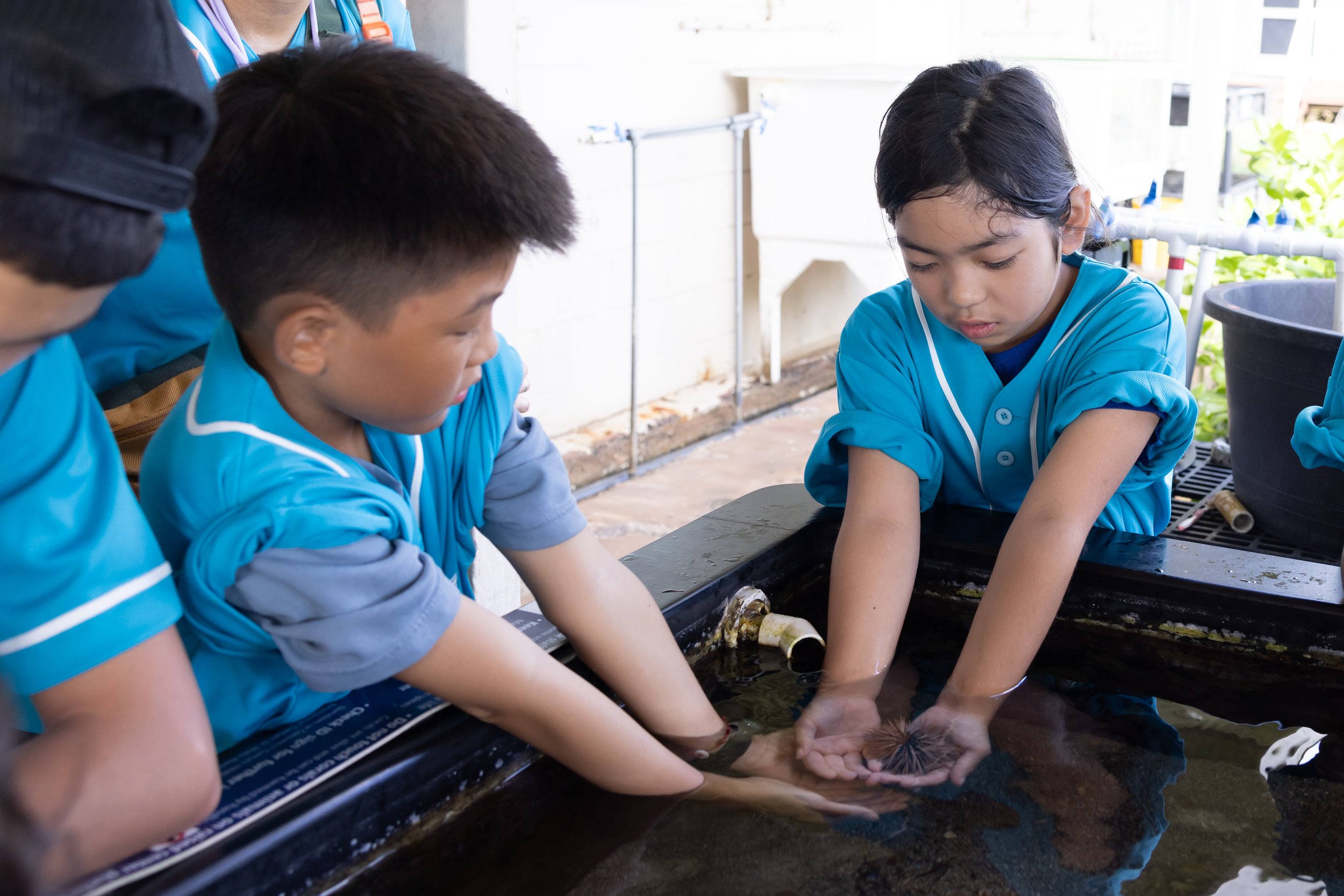
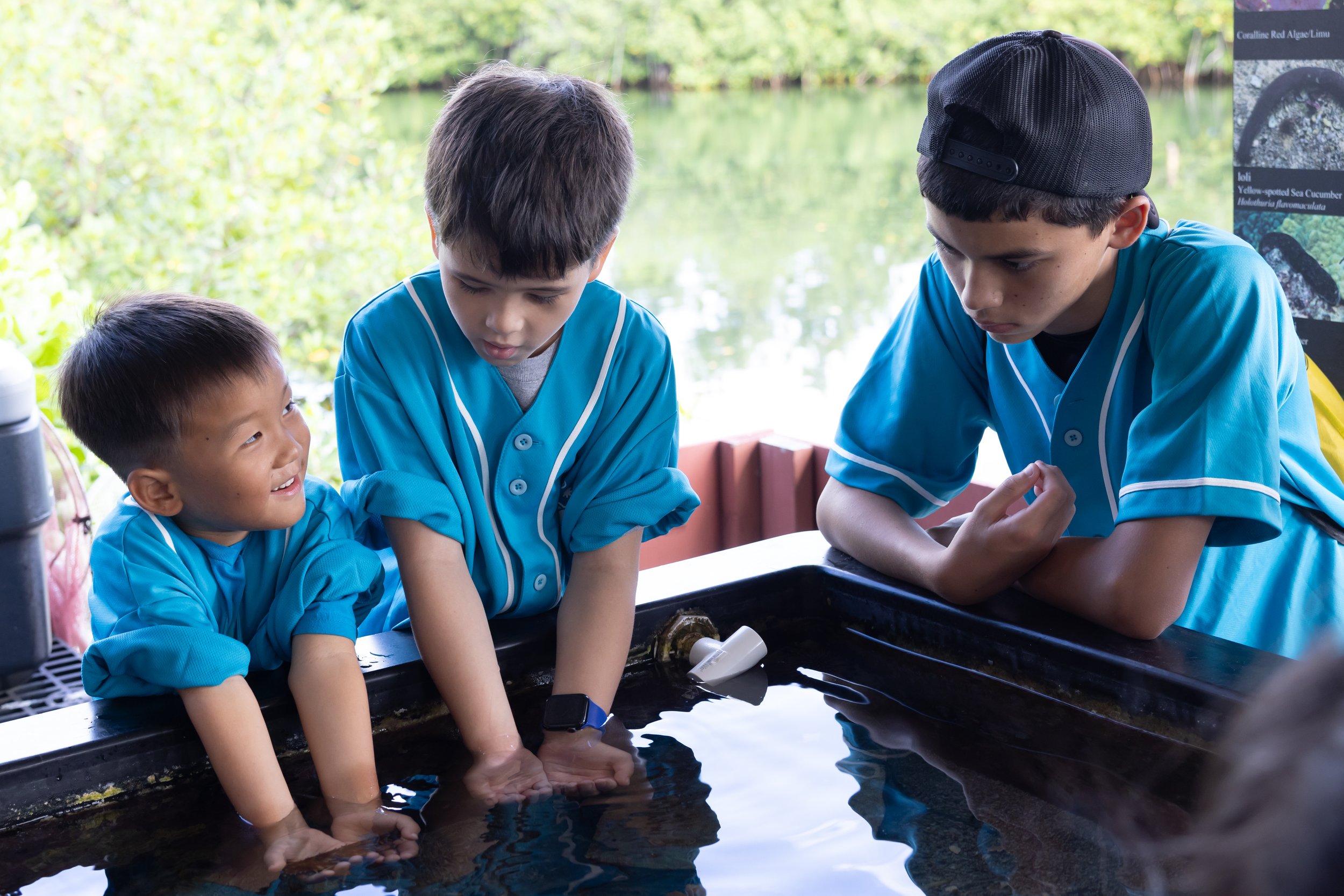
One of the highlights of the workshop was the opportunity to interact with marine animals at HIMB's educational touch tank!
Before touching anything, Lally explained that different animals require different kinds of care.
Some animals should only be observed, others may be gently touched, and certain animals may be carefully held underwater with guidance.
The children encountered fascinating creatures, including sea cucumbers, sea urchins, and feather duster worms, while learning how to handle marine life responsibly.
They practiced keeping animals underwater, using both hands when necessary, and carefully passing them to one another.
This experience taught an important lesson: Marine scientists must protect the animals they study.
Through direct observation and gentle interaction, the children discovered the unique textures, behaviors, and adaptations of marine invertebrates.
🪸 Exploring Coral Conservation and New Technology
Another exciting stop introduced the children to research and technology used to support coral reefs.
They learned that young corals need suitable hard surfaces on which to attach and grow.
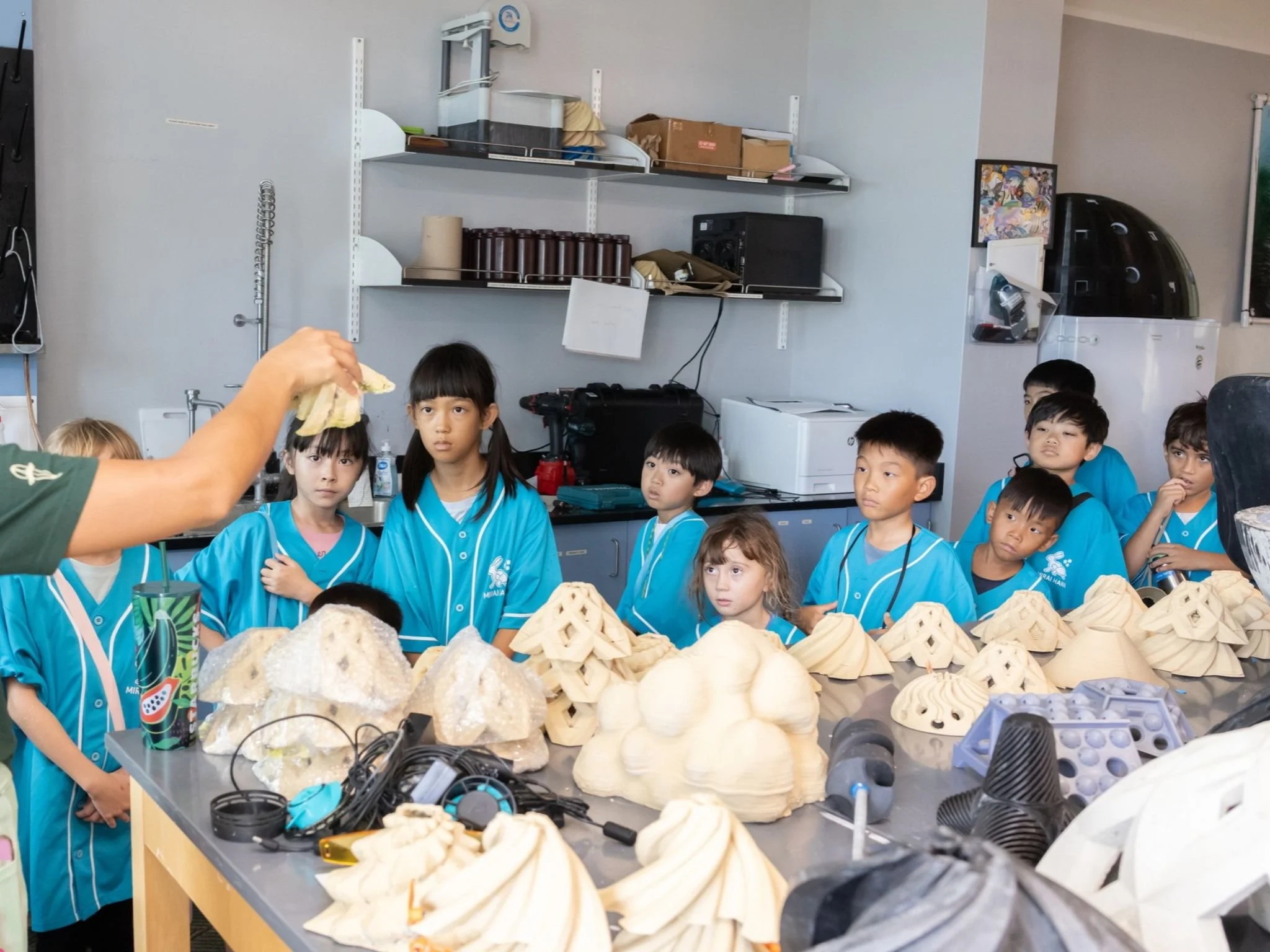
At a research area featuring 3D-printed structures designed to provide surfaces and habitat for marine life, the children examined different shapes and materials and discussed how these structures could help support coral growth and marine habitats.
They also learned that different designs may serve different purposes, depending on the needs of corals and other marine organisms.
The children even had an opportunity to examine some of the structures up close, connecting scientific ideas with real objects used in marine research.
They also visited a laboratory area where young corals were being studied.
These experiences showed the children how marine conservation can bring together biology, engineering, technology, and creative problem-solving.
🌊 Understanding Why Our Oceans Need Protection
Throughout the tour, conservation was an important part of the learning experience.
The children discussed how coral reefs face environmental challenges and how human activities can affect marine ecosystems.
They also learned about the importance of protecting habitats and the role scientific research plays in understanding and responding to environmental changes.
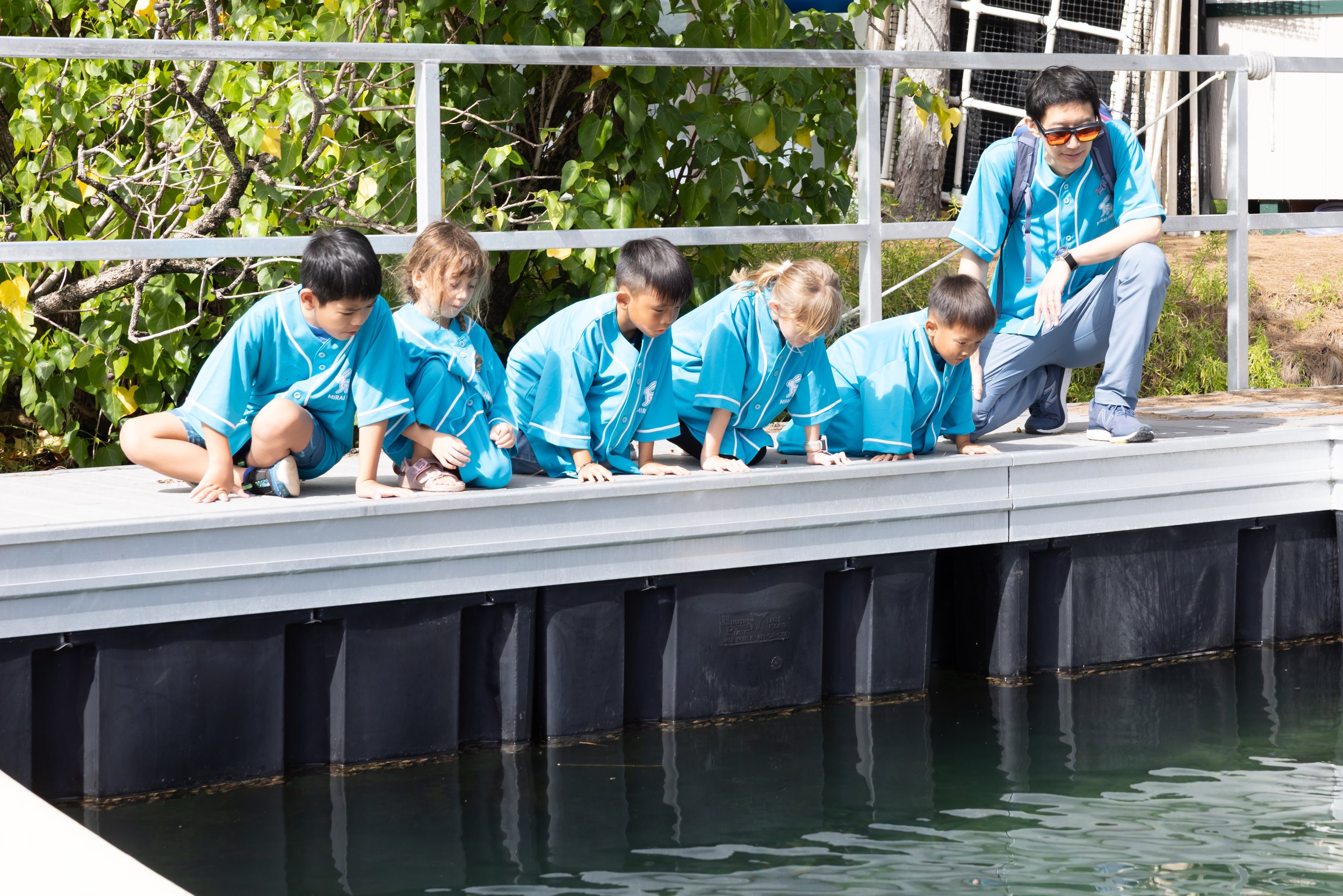
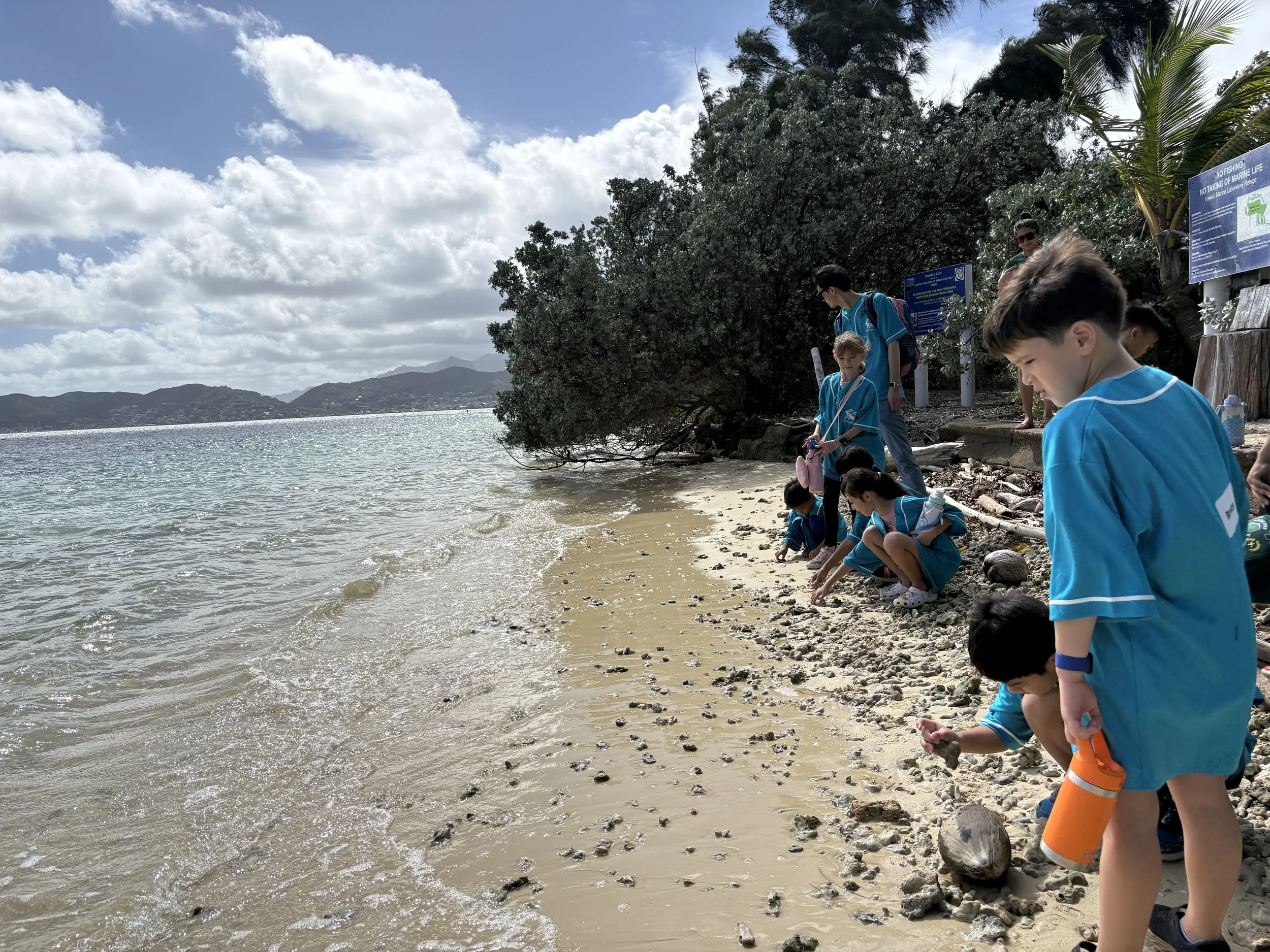
During the island exploration, the children eagerly observed fish in the water and discovered small creatures along the shoreline.
Every observation became an opportunity to ask questions, make discoveries, and connect what they were learning to the natural environment around them.
🌟 Reflecting on What They Learned
At the end of the experience, the children had an opportunity to reflect on three questions:
What did I do? What did I learn? How did I feel?
Some shared what they had discovered about coral growth and conservation, while others remembered touching sea cucumbers and learning about the unique characteristics of sea urchins.
Their reflections showed how much they had absorbed from the experience.
More importantly, the children were encouraged to think beyond what they had seen and consider why marine research and ocean conservation matter.
💙 Inspiring the Next Generation of Marine Scientists
This workshop was a wonderful reminder that learning becomes especially meaningful when children can experience it firsthand.
From traveling by boat to a research island to observing marine animals, exploring laboratories, and learning about coral conservation, the children gained a new appreciation for the people who study and protect our oceans.
A very special thank you to Lally, who guided the children with incredible energy, patience, and enthusiasm. Her engaging explanations, thoughtful questions, and wonderful connection with the children made the experience both educational and enjoyable.
We are deeply grateful to Vivian and the entire HIMB Center for Community Education team for their preparation, coordination, and warm hospitality.
We hope this experience inspired our young explorers to continue asking questions, caring for marine life, and discovering the many exciting career possibilities connected to Hawaiʻi's ocean environment.
Workshop: MIRAI HANA
Special Thanks: Hawaiʻi Institute of Marine Biology (HIMB) / Center for Community Education
MIRAI HANA 第29回こども仕事体験ワークショップ報告
Hawaiʻi Institute of Marine Biology – 海洋生物学者編
2026年11月7日(土)、14名の子どもたちが、MIRAI HANA第29回こども仕事体験ワークショップ「海洋生物学者編」に参加しました。
今回の舞台は、カネオヘ湾に浮かぶMoku o Loʻe(ココナッツアイランド)にあるハワイ大学海洋生物学研究所(HIMB)。
普段はなかなか訪れる機会のない海洋研究の現場で、海の生き物や研究施設を見学し、科学者たちがどのようにハワイの海を研究し、守っているのかを学びました。
🚤 ボートに乗ってココナッツアイランドへ!
今回の冒険は、Lilipuna Pierからスタート。
子どもたちは安全上の注意を学び、ライフジャケットを着用して、少人数ずつボートに乗り込みました。
カネオヘ湾を渡り、海洋研究のための特別な島へ。
島に到着すると、まずは研究施設でのルールや、海の生き物を傷つけずに観察するための大切な約束を確認しました。
🔬 海洋科学者のお仕事を知ろう!
今回、子どもたちを案内してくれたのは、HIMBのガイド、Lallyさん。
研究施設を巡りながら、海洋科学者たちがどのような研究を行っているのかを教えていただきました。
海洋哺乳類について学ぶ場面では、クジラ、イルカ、アザラシなどを例に、哺乳類の特徴をクイズ形式で学習。
「どうして海に住んでいるのに魚ではないの?」
そんな疑問から、肺呼吸、体温、出産、授乳などについて考えました。
また、海洋科学の研究対象は、大きなクジラから目に見えない微生物まで、非常に幅広いことも学びました。
🪸🦈 サンゴとタイガーシャークを間近で観察!
タッチタンクでの体験に進む前に、子どもたちはサンゴとタイガーシャークの研究エリアを訪れ、実際の海洋生物を間近で観察する貴重な機会をいただきました。
🪸 サンゴの研究を知ろう!
まず訪れたのは、研究のためにサンゴが飼育・管理されているエリア。
子どもたちはサンゴを間近で観察し、ハワイの海の生態系において、サンゴがどれほど大切な役割を果たしているのかを学びました。
Lallyさんは、科学者がどのようにサンゴの成長を研究しているのか、サンゴが生きるために必要な環境や、サンゴ礁が直面している問題について、分かりやすく説明してくれました。
子どもたちも、サンゴがどのように生き、成長するのかに興味津々。研究についてさまざまな質問をしました。
Lallyさんの説明を通して、サンゴは植物や岩ではなく生きている動物であり、その研究がハワイの海を守ることにつながっていると学びました。
🦈 本物のタイガーシャークを間近で観察!
続いて訪れたのは、研究目的でタイガーシャークが飼育されているエリア。
子どもたちは、本物のタイガーシャークを間近で観察する特別な機会に恵まれました!
その姿や大きさ、体の特徴などをじっくり観察しながら、興味津々の様子。
「何歳なの?」「体の長さはどのくらい?」「ほかのサメとは何が違うの?」など、Lallyさんにいくつか質問をしました。
Lallyさんは子どもたちの質問に一つひとつ丁寧に答えてくださり、楽しく印象に残る時間となりました。
普段なかなか見ることのできないタイガーシャークを実際に観察できたことは、子どもたちの好奇心をさらに刺激する特別な体験となりました!
🦀 海の生き物にふれる特別な体験!
今回の大きなハイライトのひとつが、タッチタンクでの体験です!
Lallyさんは、まず生き物によって接し方が異なることを説明してくれました。
観察するだけの生き物、優しく触ってよい生き物、水中で慎重に持つことができる生き物。
子どもたちは、ナマコ、ウニ、ケヤリムシなど、さまざまな海の生き物に出会いました。
生き物を水の外に出さないことや、両手で優しく扱うこと、次の人へ丁寧に渡すことなどを実践。
「研究すること」と「生き物を大切にすること」は、どちらも海洋科学者に欠かせない大切な姿勢だと学びました。
🪸 3Dプリンターでサンゴ礁を守る研究!
さらに子どもたちは、サンゴ礁の保全につながる研究にも触れました。
小さなサンゴが成長するためには、付着できる硬い場所が必要です。
研究エリアでは、3Dプリンターで製作されたさまざまな形の構造物を観察し、こうした技術がサンゴや海の生き物の生息環境づくりにどのように役立つのかを学びました。
形や素材の異なる構造物を実際に見ながら、海洋研究には生物学だけでなく、工学や新しい技術、ものづくりの知識も活用されていることを発見。
小さなサンゴを研究している施設も見学し、海を守るための研究について理解を深めました。
🌊 ハワイの海を守るために
島内を巡りながら、子どもたちはサンゴ礁が直面する環境問題や、人間の活動が海の生態系に与える影響についても学びました。
途中では、海の中を泳ぐ魚を見つけたり、海辺の小さな生き物を観察したりと、自然の中でもたくさんの発見がありました。
普段見慣れたハワイの海も、研究者の視点で観察すると、新しい疑問や発見にあふれています。
🌟 今日、何を学んだ?
体験の最後には、子どもたちが次の3つの質問について考えました。
「何をした?」「何を学んだ?」「どう感じた?」
サンゴの成長や保全について学んだこと、ナマコに触れたこと、ウニの特徴について発見したことなど、それぞれが印象に残った経験を振り返りました。
単に楽しかっただけでなく、体験を通して何を発見したのかを自分の言葉で整理する機会となりました。
💙 未来の海洋科学者たちへ
ボートで研究の島を訪れ、海の生き物を観察し、実際に触れ、研究施設で新しい技術について学んだ今回のワークショップ。
海洋生物学者の仕事には、生き物への好奇心だけでなく、観察力、研究する力、そして自然を大切にする気持ちが必要であることを学ぶ貴重な機会となりました。
特に、子どもたちの興味を引き出しながら、最後まで丁寧にガイドしてくださったLallyさんに心より感謝いたします。
また、今回の特別な体験を実現するために準備・調整にご協力くださったVivianさんをはじめ、HIMB Center for Community Educationの皆さま、本当にありがとうございました。
この経験が、子どもたちにとってハワイの海をさらに好きになり、海洋科学や自然保護に関わる将来のお仕事に興味を持つきっかけとなれば嬉しいです。